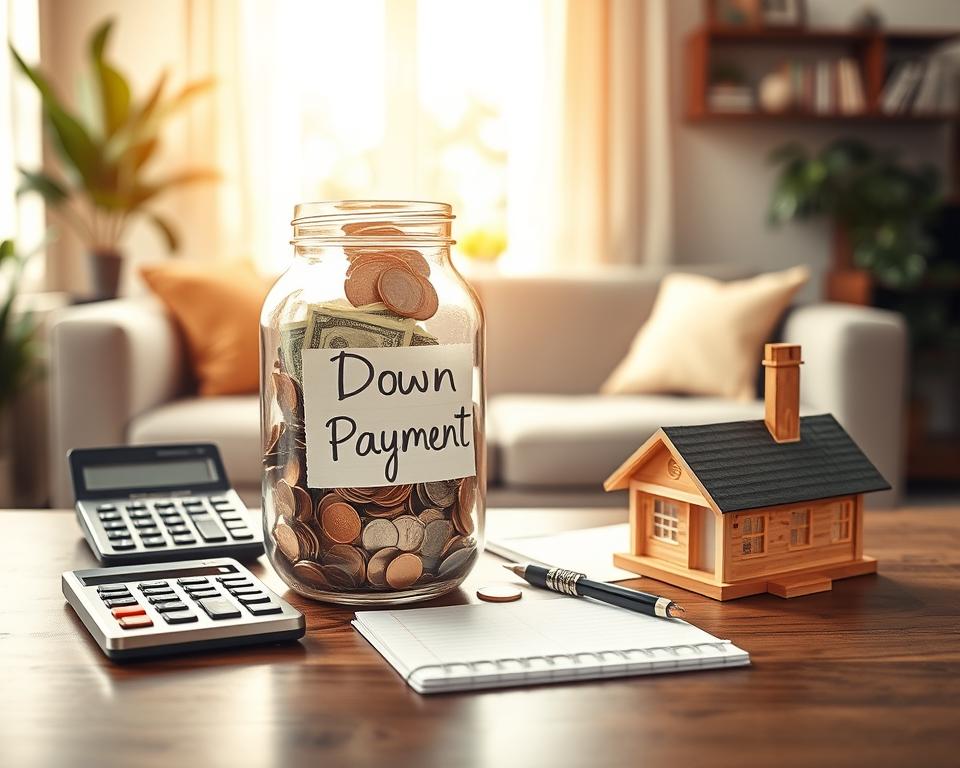
Start saving for a down payment by understanding what you need and why. Knowing the basics helps you plan better.
Learn about minimums, insurance details, and loan terms. Use a calculator to set goals that are within reach.
Save regularly in an IRA or a savings account with high interest. This way, your money grows over time.
Set up automatic deposits and keep an eye on your savings. This makes it easier to hit your target quickly.
A mortgage is a home-secured loan. It has set payments, a term length, and an interest rate, usually spread over years.
In the U.S., down payment minimums often start at 5% for eligible homes. This might increase with the home’s price.
Paying more upfront lowers monthly bills and interest. It can also skip extra insurance costs.
Putting in $50 every week can grow a lot in five years. Doing it automatically into an account helps even more.
Understanding the Concept of Down Payments
Saving for a home begins with knowing what a down payment is. It’s important because lenders need it to reduce their risk. It also helps you find the right mortgage plan.
People save money in different ways. Many save 5% to 20% of each paycheck. They put this money in a savings account. They also add any extra money they get, like tax refunds.
There are tools to help you figure out how much you can afford. They tell you what your down payment should be. This helps you set a real goal.
There are new ways to save for a home too. In the U.S., some use employer accounts or apps that help save money automatically. Canadians might use FHSA or RRSP for tax benefits. These methods help you save faster.
Here’s a quick guide to help you choose the best way for you. It depends on your time and tax situation.
- Speed: Saving cash is sure but slow. Investment accounts might grow your savings faster.
- Tax treatment: Interest from regular savings gets taxed. Tax-advantaged accounts might give you tax breaks.
- Flexibility: You can get money from standard accounts anytime. Some special accounts have rules on when you can take money out.
- Insurance impact: A bigger down payment can lower the need for insurance. Some accounts help you save up faster, reaching that big down payment sooner.
| Feature | Traditional Savings | Modern / Registered Options |
|---|---|---|
| Typical tools | Checking, savings accounts, envelopes, manual budgets | Automated transfers, robo-advisors, FHSA, RRSP with HBP |
| Growth potential | Low, depends on bank interest | Higher if invested; benefits from tax treatment |
| Access to funds | Immediate and flexible | Often conditional; may require repayment schedules |
| Effect on minimum down payment goal | Slow progress toward meeting lender minimum down payment | Can accelerate reaching down payment requirements via tax and returns |
| Best for | Low risk, short-term savers, those who need liquidity | Buyers with time horizon, tax planning, desire for down payment help |
Workflow for Saving for a Down Payment
Begin by following a step-by-step guide to make your saving goals a reality. This guide covers setting targets, making a budget, choosing where to save, and automating the process. This helps you save for a down payment with ease and meet requirements without stress.

Step 1: Set a Clear Goal
First, calculate what you need based on the price of the house. For houses up to $500,000, save 5% for the down payment. If the house costs between $500,000 and $1,499,999, save 5% on the first $500,000 and 10% on the rest. Save 20% for homes costing $1,500,000 or more.
Here’s an easy example: $500,000 home needs a $25,000 down payment. A $750,000 home requires $25,000 for the first $500,000 and $25,000 for the rest, totaling $50,000. Decide if you want to save the minimum or more to lower future payments and avoid insurance fees.
To find out how long it will take, use tools like a down payment calculator. If things change, like your income or house prices, adjust your goal.
Step 2: Create a Dedicated Savings Plan
Choose a part of your income to save regularly. Depending on your savings goal, this could be between 5% to 20%. Think of this as an ongoing expense.
Look at your spending habits. Redirect money from non-essential things like dining out or movies to your savings. Put any extra money, like tax refunds, directly into your savings to get there quicker.
Step 3: Choose the Right Savings Account
Pick an account that works for your saving timeline and tax needs. Tax-beneficial options can help. The First Home Savings Account (FHSA) is one, allowing up to $8,000 in tax-deductible contributions annually, with a cap of $40,000 and tax-free withdrawals for first homes.
Using an RRSP under the Home Buyers’ Plan lets you borrow $60,000 tax-free, as long as you repay it in 15 years. A TFSA allows for tax-free growth and easy access to your money for different saving goals.
Think about investing if you’re comfortable with the risk. While higher returns can help you save faster, they also come with the risk of losing money in the short term.
Step 4: Automate Your Savings
Start automatic transfers to your savings with each paycheck. Automation makes saving easier and helps avoid temptation to spend.
Utilize bank tools for setting up these transfers and to see potential growth. Banks like RBC offer features like RSP-Matic® for automatic saving and tracking.
Periodically check your contributions. If you can, increase them to reach your goal sooner. Even small increases can have a big impact over time.
Efficiency of Saving Methods
Savings choices impact both your funds and the timeline to your purchase. We’ll look at the financial and time advantages of common methods. This will help you choose the best way to save for a home.
Financial Impact: Statistics on Down Payments
Rules for minimum down payments affect how much cash you need upfront. For homes up to $500,000, you need at least 5% down. Between $500,000 and $1.5 million, the down payment increases in tiers. For homes over $1.5 million, a 20% down payment is usually needed.
Bigger down payments mean smaller loans, reduced monthly payments, and less interest over time. Also, you can avoid paying for mortgage default insurance. This can save you a significant amount, so consider your down payment choices carefully.
Using registered accounts like the RRSP Home Buyers’ Plan and a First Home Savings Account boosts your money. You can take out up to $60,000 from your RRSP and save up to $40,000 in an FHSA. The FHSA benefits from tax breaks, making your savings grow faster than regular accounts.
Putting away a small amount like $50 every week can grow significantly. At a 5% annual return, you could save about $14,761 in five years. This shows the power of regular saving in meeting your home buying goals.
Time Savings: Streamlined Processes
Setting up automatic contributions to savings accounts makes the process easier and faster. It helps make saving a regular habit without requiring constant attention or decision-making.
Using digital tools for planning can also save you time and improve accuracy. Getting advice from banks like Scotiabank or RBC can offer personalized plans. They provide access to special calculators and products that can help you save faster.
Accounts with tax advantages help you reach your goals quicker by boosting your returns. The money you save grows faster without the taxes, speeding up your progress towards buying a home.
When looking at down payment help, consider the short-term benefits against long-term costs. Assistance programs offer quick access but may have strings attached. Evaluate all your options to find the best path in terms of money and time savings.
Addressing Common Hurdles
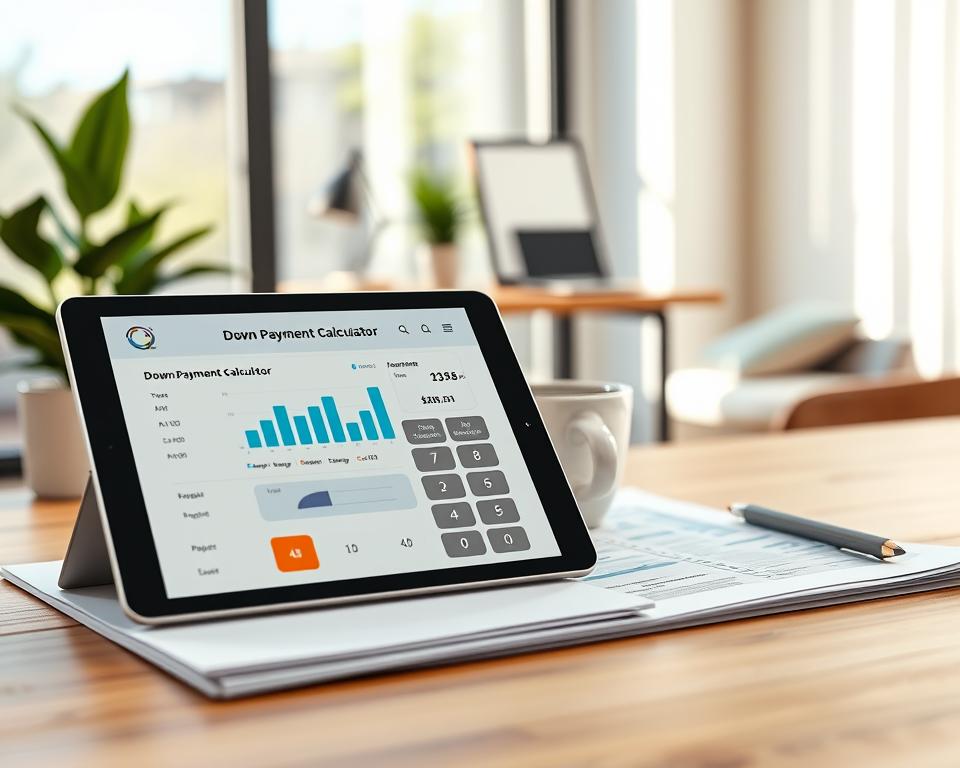
Saving for a home might seem hard when you have limited income, prices go up, or your funds seem out of reach. But, practical steps and easy tools can help you move forward. Setting realistic goals, creating short milestones, and using tools like a down payment calculator makes your progress clear.
Overcoming Savings Challenges
Begin by making a timeline that matches your cash flow. If your monthly income changes, aim to save a portion of your earnings, like 5% to 20%. You can adjust this as your income changes.
If home prices go up, try looking in more areas or plan to make a larger down payment. This can reduce your loan costs. Using tools to understand these trade-offs can help too.
Look into programs that allow you to use funds without penalties. For instance, some plans let you use retirement savings for your first home. This can ease the pressure on your down payment savings. It’s important to know your options and their rules.
If you save less than 20% for a down payment, remember to budget for mortgage insurance costs. Understanding this extra cost can help you decide whether to save more or look for help to reduce your monthly expenses.
For more details on formal programs, check out trusted resources like down payment options in Canada. Then, talk to a bank advisor.
Tips for Staying Motivated
Make saving easier by automating your transfers. Small, regular contributions can make a big difference over time. This makes saving for a down payment more reachable.
Set short-term goals, like hitting a savings target in three months or paying off debt. Celebrating these achievements can keep you motivated. Just don’t spend what you save.
Put extra money like bonuses or tax refunds into your down payment savings. A special account name or app label can help you see your progress.
Using different tools can help keep you accountable. A down payment calculator shows you real numbers to aim for. Talking with a financial planner adds another layer of support.
| Challenge | Practical Response | Useful Tool or Program |
|---|---|---|
| Income constraints | Set percentage-based savings and extend timeline; add side income | Automated transfers, budgeting apps |
| Rising home prices | Target affordable price ranges or save a larger down payment | Down payment calculator, lender affordability tool |
| Limited access to funds | Use permitted withdrawals from retirement accounts or special savings accounts | Home Buyers’ Plan, FHSA equivalents |
| Mortgage insurance costs | Plan for premiums or increase down payment to 20%+ | Mortgage quotes, insurance rate tables |
| Lack of motivation | Break goals into milestones, automate savings, funnel windfalls | Financial planner, savings trackers |
The Importance of Down Payments
Putting down a thoughtful payment on a mortgage shapes your homeownership path. A bigger initial payment increases your ownership in the property. This lowers monthly costs and impacts loan program eligibility.
Building Equity
Your down payment is your first step in owning a piece of the property. A larger payment reduces the loan amount, cutting monthly costs. This also lowers the total interest you pay over time.
This can help you qualify for more expensive properties and often gets rid of the need for private mortgage insurance. This insurance adds about 1.70%–4.20% to your mortgage expenses. Thus, a decent down payment saves money in the long run.
Strengthening Financial Options
Exceeding the minimum down payment betters your loan-to-value ratio. A lower LTV means less risk for lenders, leading to better interest rates. This also increases your chances of mortgage approval.
Pairing savings tools like the First Home Savings Account with other programs can boost your funds. Using tax-advantaged accounts helps your money grow. This may give you more capital for the down payment, making it easier to meet strict requirements.
Exploring Financing Alternatives
Federal loan programs can make buying a home more achievable. They offer ways to lower or even remove the down payment for those who qualify. Picking the right option involves looking at costs, who can apply, and future plans.
FHA Loans: Low Down Payment Options
FHA loans help many get homes with a small down payment of 3.5%, if they fit the credit and income rules. But, they come with mortgage insurance costs that increase monthly payments. These extra costs depend on the down payment and length of the loan.
To get specifics, work with an FHA-approved lender. They can tell you about rates, what documents you need, and when the insurance stops. For those needing help with the down payment or more flexible credit rules, FHA loans are a choice to consider.
VA Loans: Benefits for Veterans
VA loans are for veterans, active service members, and some spouses, usually without needing a down payment. Plus, they often don’t need private mortgage insurance, which can lower monthly expenses compared to other loans with small down payments.
These loans have their own fees and rules for appraisals. A VA-approved lender can help figure out if you qualify and if it’s the right option to reduce initial costs or combine down payment help with saving for the future.
Looking at other options like short-term private loans? Make sure to closely review the types of lenders, their fees, and the process. For insights into private mortgages, including costs, visit private mortgage guide. This can help in weighing private versus federal loan options.
| Program | Typical Minimum Down Payment | Mortgage Insurance / Fees | Best For |
|---|---|---|---|
| FHA Loan | 3.5% | Upfront and annual MIP; duration depends on down payment | Low-credit buyers needing down payment assistance |
| VA Loan | 0% | Funding fee based on service history; no PMI | Eligible veterans and active-duty personnel |
| Conventional (Low Down) | 3%–5% | Private mortgage insurance until 20% equity | Buyers with solid credit seeking lower mortgage down payment |
| Private Mortgage | Varies; often 20%+ preferred | Higher interest rates and lender fees; legal and appraisal costs | Short-term needs, unconventional properties, credit rebuild |
Conclusion: The Road to Homeownership
Buying a home begins with a solid plan. Use a down payment calculator to set a clear goal. This is based on your home’s price and the lowest down payment needed. Down payment amounts usually range from 5% to 20%. Decide if you want to save just the minimum or more. This can lower your costs in the long run. Also, choose a timeline that matches your budget.
To save for a down payment quickly, budget wisely and use automatic savings. Think about saving 5%–20% of your income in a special account. Set up automatic transfers to this account. Also, use accounts that save you tax money, like a First Home Savings Account or IRA strategies in the U.S. Even small amounts, like $50 every week, can grow a lot in five years because of compound interest.
If saving a standard down payment seems tough, look at other loans like FHA or VA loans. These can help with down payments. But, remember they might come with extra costs like mortgage insurance. Use a down payment calculator and talk to a mortgage advisor. This way, you can explore different choices and understand their costs.
Take a small step today towards owning a home. Use a down payment calculator, open a savings account just for this, start an automatic saving plan, or schedule a chat with a financial advisor. Keep an eye on your savings, change your plan when you need to, and use automatic savings, tax-friendly accounts, and expert advice to meet your goal. Small, repeated steps lead to big results. A well-thought-out plan can make owning a home a reality.