
Buying a home demands clear language, so let’s demystify deed vs title and how each supports secure property ownership.
Think of title as the legal rights to own, use, control, and transfer land, while a real estate deed is the signed document that moves those rights.
Before closing, professionals verify a marketable title through a title search, checking liens, claims, and the chain of title to prevent costly surprises.
At the signing table, grantor and grantee complete the conveyance with a properly executed Title deed that gets recorded to notify the public.
You do not get a sheet of paper called “title.”
Title is a legal status that confirms ownership rights attached to the property.
Those rights exist because records, like deeds and surveys, support them.
A real estate deed is the instrument that transfers title from grantor to grantee.
It includes the parties, the property description, intent to convey, consideration, and signatures.
Most states require notarization, and then recording in county land records.
Why it matters: lenders and buyers want a marketable title free of clouds.
Searches review the chain of title to spot liens, unpaid taxes, or errors.
Title insurance from companies like First American or Fidelity National adds protection.
When the deed is executed and recorded, the conveyance becomes part of the public file.
This puts the world on notice and supports future sales or refinancing.
It also helps keep property ownership clear for decades.
Understanding Title vs. Deed in Property Ownership
Buying a home means learning the difference in title vs deed. Title is a legal idea, while a deed is a paper you sign. Knowing both helps you protect your purchase and your financing.
Title: The legal bundle of rights to own, use, control, and transfer real property
Title is the bundle of rights tied to a property. It lets you live there, rent it, sell it, or pledge it as collateral. Lenders and buyers look for a clean record so those rights are secure.
A title search checks past transfers and public filings. This review builds the chain of title and confirms that the seller can pass full rights to the buyer.
Deed: The signed legal instrument that conveys those rights from grantor to grantee
A deed is the document that moves those rights from grantor grantee. When signed and delivered, it transfers ownership. Different forms exist, such as general warranty, special warranty, and quitclaim.
Core deed requirements often include the parties’ names, the legal description, words of conveyance, consideration, and signatures. Many states require notarization, and some add witness rules.
Why clear and marketable title matters before closing
Lenders expect a clear, marketable title before funding. That means no hidden liens, unpaid taxes, or unresolved claims that could harm the buyer. Title insurance is priced from what the records reveal.
When defects appear, they must be fixed before closing. Correcting errors, releasing liens, and verifying estates all protect the new owner’s rights.
How deeds support the chain of title and public record
After signing, real estate recording places the deed into the county’s public index. This step gives notice to the world and preserves the chain of title.
Proper real estate recording also confirms deed requirements were met under state law. Accurate indexing makes future searches faster and helps keep a stable market for buyers and sellers.
Understanding the Concept: Old Way vs New Way
The old way blurred the line between title and deed. Many buyers treated them as the same thing. The new way draws a clear line: title is the ownership right, and the deed is the signed instrument that transfers it. This shift supports a marketable title backed by public records and lender standards.
In the past, some deals leaned on a seller’s word. Today, a title search reviews liens, taxes, and prior claims. If issues appear, professionals cure defects before funds move. Title insurance then helps guard against unknown risks that a search might miss.
Closings once ended with a handshake at the kitchen table. A modern real estate closing relies on escrow as a neutral hub, where documents are checked and money is released only when conditions are met. After deed recording, the change of ownership becomes part of the public record.
Paperwork used to be thin and uneven. Now, standardized deeds and clear execution rules support the chain of title. Lenders expect protections, from title insurance to compliant notarization, so buyers and sellers face fewer surprises.
This evolution favors certainty, smoother funding, and fewer disputes across diverse markets.
| Aspect | Old Way | New Way | Buyer Benefit |
|---|---|---|---|
| Concept of Ownership | Title and deed treated alike | Title = rights; deed = transfer document | Clarity about legal status and obligations |
| Verification | Seller assurances | Professional title search and defect curing | Lower risk of hidden liens and claims |
| Risk Protection | Informal promises | Title insurance for unknown issues | Financial coverage after closing |
| Closing Process | Handshake and local customs | Escrow-managed modern real estate closing | Neutral control of funds and documents |
| Public Notice | Spotty or delayed filings | Prompt deed recording in county records | Stronger chain of title and transparency |
| Documentation | Minimal or inconsistent forms | Standardized deeds and lender safeguards | Predictable requirements and smoother funding |
Workflow
The home closing process starts with a signed purchase and sale agreement that sets price, terms, and contingencies. The escrow process opens next, placing funds and key documents with a neutral holder while timelines are tracked and conditions are met.
Early in the timeline, title search steps confirm the seller’s right to convey and flag liens, unpaid taxes, or errors. Inspections and loan approval move in parallel. Any clouds must be cleared by curing title defects, such as releasing liens or correcting recording mistakes, so the title is marketable.
Parties then choose the deed form that fits their risk plan. The deed is drafted with legal description, consideration, and state-required signatures. At closing, deed execution occurs alongside loan papers, and escrow confirms every item on the checklist has been satisfied.
Some jurisdictions require a transfer tax, separate from property taxes, due at or just before recording. The deed is then submitted for recording with the county, which provides public notice and preserves the chain of title. Title insurance policies are issued, funds disburse, and escrow closes with final documents delivered.

| Step | Action | Who Leads | Key Outputs |
|---|---|---|---|
| 1 | Sign purchase and sale agreement | Buyer & Seller, with agent support from firms like Compass or Keller Williams | Executed contract, timelines, contingencies |
| 2 | Open escrow process | Escrow/settlement company (e.g., First American, Fidelity National Title) | Earnest money deposit, escrow instructions |
| 3 | Run title search steps | Title company | Preliminary report listing liens, taxes, and recording issues |
| 4 | Inspections and financing | Buyer, lender (e.g., Wells Fargo, Chase), licensed inspectors | Inspection reports, loan approval, appraisal |
| 5 | Curing title defects | Title company, seller, lienholders | Releases, corrective affidavits, cleared taxes |
| 6 | Select deed type and draft | Closing attorney or escrow officer | General warranty or other deed prepared |
| 7 | Deed execution at closing | Grantor and grantee, notary | Signed and notarized deed, loan package |
| 8 | Pay transfer tax if due | Buyer or seller per local law | Receipt or affidavit of exemption |
| 9 | Submit for recording | Title/escrow | Recorded deed, book and page or instrument number |
| 10 | Issue title insurance | Title underwriter (e.g., Old Republic Title) | Lender’s policy and optional owner’s policy |
| 11 | Disburse and close | Escrow | Funds released, keys delivered, final statements |
Title deed
The title deed definition centers on a simple idea: it is the signed paper that moves real property from one party to another. It works alongside title but is not the same thing. When complete, it serves as evidence of ownership transfer and places the public on notice about who owns the home.
Strong deed elements keep a deal clean. They list the grantor grantee by full names and addresses, state clear intent to convey, and describe the property with a precise legal description. Many states also call for consideration, even if nominal, and the seller’s signature to make the document effective.
Most home sales use a general-warranty deed, while special-warranty and quitclaim deeds appear in limited cases. Regardless of type, notarization is common so the county recorder accepts the filing. Without proper notarization, the recording deed step can fail, which delays loans, taxes, and insurance.
Once signed and delivered, the instrument becomes strong evidence of ownership transfer. The recorder’s office then indexes the parties and the legal description so future buyers and lenders can verify the chain. That public record confirms the grantor grantee relationship and supports market confidence.
Tip: Review local rules before closing to confirm all deed elements appear exactly as required by your state.
Key Options
Homebuyers weigh deed types, coverage, and closing tools to manage risk and meet lender requirements. The choice affects buyer protection, the speed of closing, and how issues get resolved in escrow.
A general warranty deed gives the broadest guarantees across the entire chain of title. A special warranty deed limits promises to the seller’s period of ownership. A quitclaim deed offers no warranties and simply transfers whatever interest exists.
Lenders often require title insurance to secure the mortgage. Buyers can add an owner’s policy for extra buyer protection against hidden liens, recording errors, or fraud discovered after closing. These policies work hand in hand with escrow to confirm documents and payments before funds move.
In most markets, escrow coordinates the deed delivery, title reports, and payout of proceeds. That structure helps align lender requirements with the right deed choice and the level of title insurance a buyer prefers.
| Name | Role | Main Benefit |
|---|---|---|
| General Warranty Deed | Transfers ownership with full seller warranties across the entire chain of title | Highest buyer protection against title defects, even before the seller’s ownership |
| Special Warranty Deed | Transfers ownership with limited warranties covering only the seller’s period | Balances risk when prior defects are unknown or cannot be guaranteed |
| Quitclaim Deed | Conveys whatever interest the grantor holds, with no warranties | Useful for clearing clouds or transfers among related parties |
| Title Insurance (Lender’s) | Protects the lender’s security interest and enforces the mortgage | Often a condition of closing under lender requirements |
| Title Insurance (Owner’s) | Protects the buyer’s equity and ownership rights | Covers undisclosed liens, fraud, and recording errors for added buyer protection |
| Escrow | Neutral party holding funds and documents until conditions are met | Coordinates title review, deed exchange, and secure disbursements |
Consider how each option fits the property’s history and your goals. Align the deed type with your risk tolerance, pair it with the right title insurance, and use escrow to keep the closing organized and secure.
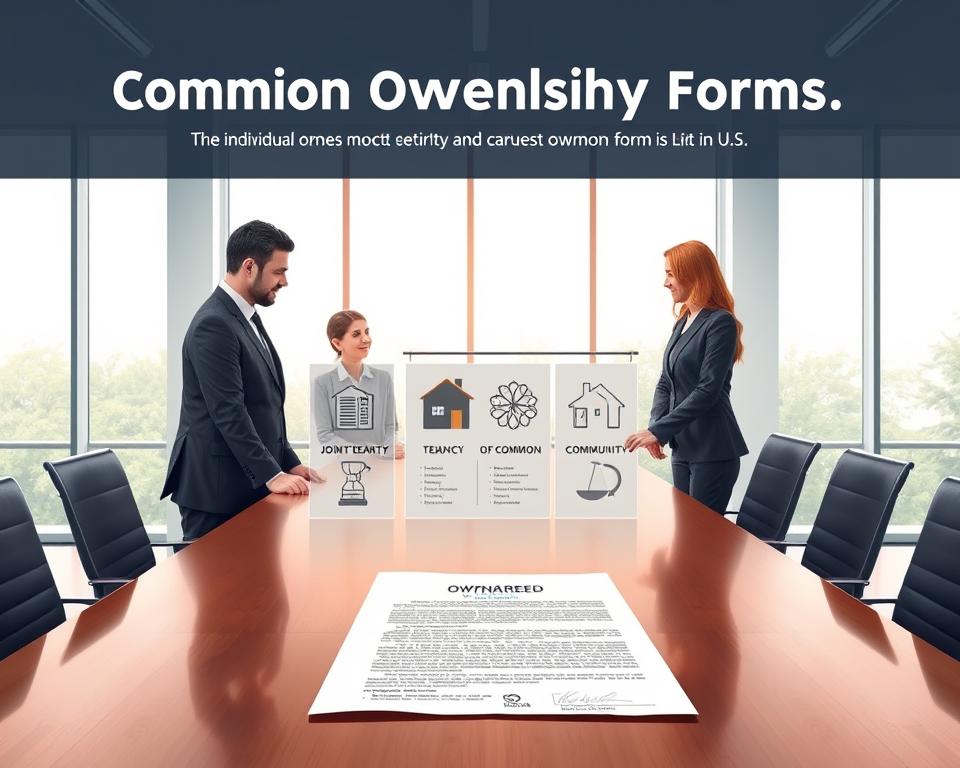
Common Ownership Forms in the U.S.
Homebuyers choose among several ownership types based on goals, taxes, and transfer needs. The form you pick shapes control, financing, and what happens after a death. It also affects how a deed reads and how title insurance treats risk.
Understanding the differences helps match your needs to the right structure while keeping future transfers clean.
Sole ownership
Sole ownership puts one person in charge. One owner signs, controls decisions, and bears all benefits and risks. This path can be simple to finance and sell, but estate plans must guide the next transfer.
Joint tenancy with right of survivorship
In joint tenancy, co-owners hold equal shares. The key feature is survivorship, so a deceased owner’s share passes to the surviving owners without probate. Many couples use this form to speed transfer and keep continuity.
Tenancy in common with flexible, unequal shares
With tenancy in common, owners can hold unequal interests and sell or will their shares freely. There is no survivorship. Each interest can pass by will or trust, which can suit investment partners with different contributions.
Community property in certain states
In community property states, most assets acquired during marriage belong to both spouses equally. Some couples choose community property with right of survivorship to combine partnership rules with streamlined transfer. Local statutes guide what counts as separate property.
Condominium and shared common areas
A condominium title grants a deed to the individual unit plus a share of common areas. Owners follow recorded covenants set by the association. Lenders review budgets, reserves, and rules that affect resale and insurance.
Cooperative shares with proprietary lease
Under cooperative ownership, buyers purchase shares in the corporation that owns the building and receive a proprietary lease for a unit. Board approval is common, and transfers follow corporate rules. The structure shifts focus from real property deed to personal shares and occupancy rights.
| Form | Who Holds Title | Survivorship | Transfer Method | Typical Use Case |
|---|---|---|---|---|
| Sole ownership | One individual | No | Deed or will/trust | Single buyers seeking simple control |
| Joint tenancy | Two or more co-owners, equal shares | Yes, automatic to survivors | Passes to survivors; last survivor uses will/trust | Partners who want quick transfer without probate |
| Tenancy in common | Two or more co-owners, any shares | No | Each owner can sell or bequeath their share | Investors with flexible, unequal shares |
| Community property | Spouses in community property states | Optional if designated with survivorship | By agreement, will/trust, or survivorship if elected | Married couples balancing equality and tax basis rules |
| Condominium title | Unit owner plus shared common elements | Depends on chosen co-owner form | Deed transfers the unit and common interest | Urban buyers seeking amenities with ownership |
| Cooperative ownership | Shares in corporation; proprietary lease for unit | Depends on share agreement | Stock and lease assignment with board approval | City residences where the co-op manages building rules |
Before choosing, review local statutes, association covenants, and lender guidelines to match the structure with financing, taxes, and long-term plans.
How Title Searches and Chain of Title Protect Buyers
A thorough title search brings hidden risks to light before money moves. By tracing the chain of title in public records, buyers and lenders see how ownership passed from one party to the next. This process supports buyer protection and helps set up a clear title at closing.
Why it matters: lenders often require proof that no clouds on title will derail funding. If liens and encumbrances appear, curing defects becomes a priority so the deal can proceed with confidence.
Verifying seller’s right to convey through historical records
Examiners review deeds, mortgages, and court filings to confirm the seller can legally convey the property. This verification links each transfer in the chain of title and flags breaks, missing signatures, or unreleased interests. The outcome supports buyer protection by ensuring authority to sell is valid.
Identifying clouds: liens, unpaid taxes, recording errors, prior claims
Research can surface clouds on title such as unpaid taxes, mechanics’ claims, or boundary disputes. It can also uncover liens and encumbrances from prior loans, HOA assessments, or judgments, along with recording mistakes that misstate legal names or lot numbers. Spotting these issues early helps avoid delays and financing setbacks.
Curing defects to deliver clear, marketable title before funding
Once defects are found, the parties focus on curing defects with releases, corrections, or payoff letters. The goal is a clear title that satisfies underwriting and positions the property for funding. Title insurance then backs buyer protection if a covered problem emerges after closing.
| Issue Found | Typical Impact | Common Cure | Result for Buyer Protection |
|---|---|---|---|
| Unpaid property taxes | Tax lien blocks financing and transfer | Seller pays balance; county issues release | Clouds on title removed, path to clear title |
| Old mortgage not released | Shows as active lien in records | Lender files satisfaction or lost-note affidavit | Liens and encumbrances cleared |
| Clerical recording error | Mismatched legal description or name | Corrective deed or re-recording | Chain of title aligned and verified |
| Mechanic’s lien | Contractor claim clouds ownership | Negotiated payoff or bond to discharge | Restores marketable, clear title |
| Prior heir or joint tenant claim | Competing ownership interest | Quitclaim, probate order, or court release | Secures buyer protection at closing |
Efficiency
Strong real estate workflows reward buyers and lenders with transaction efficiency built on clear steps and verified data. Standardized deed language, robust title searches, and title insurance work together so deals move with predictable closings while still meeting lender requirements across states.
General-warranty deeds used in home sales, paired with a reliable recording system, help confirm rights and sequence. When defects surface early, curative actions reduce friction, support escrow efficiency, and preserve marketable title benefits for all parties.
Risk reduction with data-driven protections
Title exams analyze liens, taxes, and prior claims to shrink unknowns. Title insurance then absorbs residual risk that due diligence cannot remove. With documented fixes, the recording system gives public notice that deters disputes and safeguards marketable title benefits.
Escrow instructions set triggers for funds and documents, which tightens controls. The result is transaction efficiency that keeps momentum even when issues appear late.
Time and cost predictability at closing
Lenders set clear checkpoints: proof of insurance, payoff statements, and signatures that meet lender requirements. Known transfer taxes and prepaid items are tallied in advance, which supports predictable closings and fewer re-disclosures.
Escrow efficiency also trims idle time. When every condition is satisfied, funds release and deeds record the same day, limiting per diem interest and rush fees.
Market stability through clarity of ownership
Public recording and standardized conveyance terms reduce ambiguity about who owns what. That clarity fuels credit access and steadier pricing because loans can be underwritten with confidence.
As claims fall, marketable title benefits scale beyond one deal. Confidence grows, timelines compress, and predictable closings become the norm in active markets.
| Process Element | Primary Purpose | How It Drives Efficiency | Outcome |
|---|---|---|---|
| Title Search & Curative Work | Identify and resolve defects | Cuts rework and prevents last-minute delays | Faster, predictable closings |
| Title Insurance | Shift residual risk | Reduces litigation exposure for buyers and lenders | Stable costs and stronger confidence |
| Escrow Coordination | Hold funds and documents to conditions | Synchronizes signatures, payoffs, and recordings | High escrow efficiency and smooth funding |
| Recording System | Public notice and priority | Deters competing claims with clear timelines | Durable, marketable title benefits |
| Lender Requirements | Standardize risk controls | Creates uniform checklists and timelines | Consistent transaction efficiency |
Practical Differences You’ll See at Closing
On closing day, escrow coordinates the paperwork, funds, and final checks so ownership can pass cleanly. Expect to review the deed requirements, confirm title insurance details, and verify any final adjustments before you sign.
Who signs the deed, and what must it include
Deed signatures are handled in front of a notary, and some states require witnesses. A valid deed includes the parties, a clear legal description, the grantor’s intent to convey, stated consideration, and all signatures required by state law. Once executed, the deed transfers the interest to the grantee.
Tip: Your closing team will confirm local deed requirements so the instrument is enforceable in court and accepted for recording.
When transfer taxes may apply, separate from property taxes
A transfer tax is a one-time charge triggered by the conveyance, not the same as annual property taxes. Who pays varies by state or county; some split it by contract. The settlement statement will show the exact amount and any exemptions.
Recording the deed to put the world on notice
After signing, the deed goes to the recording office to become part of the public record. Recording protects priority, supports the chain of title, and helps prevent later disputes. Keep a certified copy for your files once indexing is complete.
HOA and condo nuances, plus co-op ownership exceptions
Homes in associations often carry HOA deed restrictions that limit use, exterior changes, or rentals. Buyers should read covenants and bylaws before funding, since violations can trigger fines.
For a condo deed, you take title to the unit and an undivided share of common areas. In a cooperative, you receive shares and a co-op proprietary lease instead of a deed, and the board must approve transfers.
| Topic | What You’ll See | Why It Matters |
|---|---|---|
| Deed Signatures | Seller signs; buyer may sign in some states; notarization and possible witnesses | Ensures a valid conveyance that meets deed requirements |
| Transfer Tax | Shown as a one-time line item on the settlement statement | Separate from annual property taxes; affects total cash to close |
| Recording Office | Deed submitted for indexing in county land records | Public notice protects priority and the chain of title |
| HOA/Condo | HOA deed restrictions and a condo deed with shared common interests | Defines use limits, assessments, and maintenance obligations |
| Co-op | Shares issued and a co-op proprietary lease rather than a deed | Ownership runs through the corporation; board approval required |
Summary
This title deed summary ties the core ideas together. Title is the legal bundle of rights to own, use, control, and transfer property. The deed is the signed instrument that conveys those rights from grantor to grantee. A title search recap confirms a clear title by reviewing the chain of title, curing liens, unpaid taxes, clerical errors, and prior claims before funding. Most buyers rely on a general warranty deed for broad protections, while special warranty and quitclaim deeds shift risk in different ways.
At escrow closing, a neutral party coordinates funds, documents, and conditions so the deal meets state law and lender rules. Once signed, deed recording gives public notice and supports market stability. Lenders usually require title insurance to guard against hidden defects; owners can add a policy to protect equity from fraud or recording mistakes. Transfer taxes may apply at conveyance and are separate from annual property taxes.
How you hold title affects rights and survivorship. Sole ownership, joint tenancy, tenancy in common, and community property work differently at transfer. Condominium and cooperative models add shared elements and rules that shape use and resale. For a smooth close, align your deed choice with risk tolerance, confirm a clear title through due diligence, and ensure accurate deed recording.
In practice, combine a thorough title search recap with a suitable warranty deed, proper title insurance, and a well-run escrow closing. These steps protect the buyer, satisfy lender standards, and preserve the integrity of the public record.