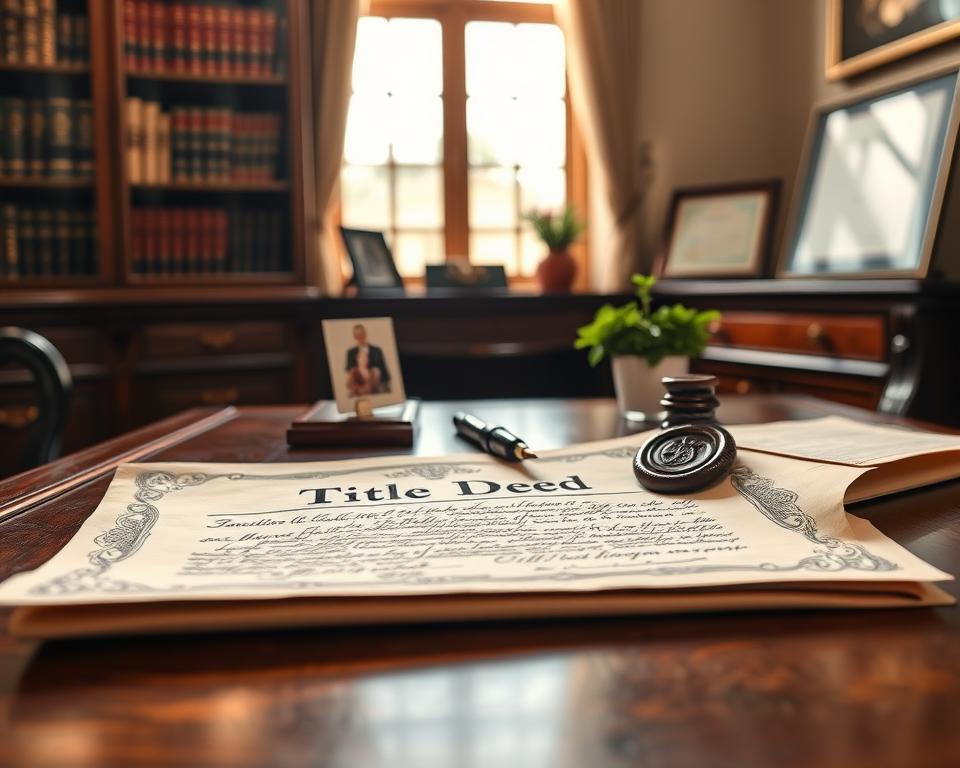
Confused by crowded paperwork and tight deadlines, many buyers stall and risk costly delays in property transactions.
Mixing up ownership terms creates funding holds, closing headaches, and surprise claims against your new home.
The fastest way to cut through the noise is to learn how a Title deed proves and moves ownership.
This guide shows how the Title deed works at closing, what it contains, and how it protects buyers.
Understand the ownership document that transfers rights, what must be signed, recorded, and accepted to make ownership official.
A closing search reviews public records like previous transfer documents, mortgages, liens, easements, and court files to confirm clear ownership.
Common transfer types range from full buyer protection to limited or no warranties, affecting buyer risk and lender approval.
Lenders and closing attorneys rely on recorded records and insurance to underwrite and protect against hidden defects.
For practical steps and linked resources, see our privacy and process note at process details and privacy.
Navigating Property Paperwork Doesn’t Have to Be Confusing
Clear guidance cuts through closing confusion and keeps your transaction on schedule. Start by knowing which documents prove ownership, who checks them, and where records live.
Who does what
Seller, buyer, lender, and the closing attorney each handle specific tasks. The lender often requires insurance and a clean title search before funding.
“A recorded transfer puts the public on notice and protects your rights.”
- Know that title is the legal right and a deed is the written transfer instrument.
- County recording makes transfers official and prevents later claims.
- Common issues include missing releases, name mismatches, and overlooked easements.
| Step | Who | Why it matters |
|---|---|---|
| Search public records | Title company | Find liens, mortgages, easements |
| Execute transfer | Seller/Buyer | Creates the official instrument to change ownership |
| Record at county | Closing attorney | Provides public notice and priority |
For more about who we are and how we help buyers and sellers, see our about us page for a quick overview.
Understanding the Concept: Old Way vs New Way
Compare the old approach with modern best practices to avoid common pitfalls and speed the sale.
- Old Way: Assume title and deed are the same. New Way: Treat the title as ownership rights and the deed as the signed, recorded document that moves those rights.
- Old Way: Rely on the seller’s word. New Way: Run a full title search through public records—prior deeds, mortgages, liens, easements, wills, and divorce records—to confirm a clear title.
- Old Way: Let papers pile up and slow closings. New Way: Use county recording, standardized checklists, and closing workflows to keep the process on track.
- Old Way: Expect no surprises after signing. New Way: Buy title insurance to reduce risk from hidden claims or recording gaps.
- Old Way: Pick any deed without thinking. New Way: Match deed types to risk—General Warranty, Special Warranty, or Quitclaim—so the transfer fits the deal.
- Old Way: Ignore restrictions. New Way: Review easements, covenants, and use limits early so obligations are clear before you sign.
- Old Way: Hope defects won’t appear. New Way: Resolve name errors, unreleased liens, or missing satisfactions before closing.
- Old Way: Rely on memory. New Way: Document every step with checklists and professional search tools to protect your property transfer.
“A clean process and verified records save time and money at closing.”
What Is a Title deed and Why It Matters
A clear transfer record makes ownership simple to prove and hard to dispute.

Legal document versus legal right. The deed is the signed, written document that the grantor gives to the grantee and records at the county. Recording creates a public, verifiable trail for property ownership.
Title describes the intangible legal status: the bundle of rights to use, improve, sell, or pass on the estate. One is the physical document; the other is the set of ownership rights that follow the land.
Why lenders, buyers, and sellers care
- The recorded instrument establishes an enforceable chain of ownership and supports financing and resale.
- Lenders usually require a recorded document and title insurance before they fund a mortgage.
- Title insurance and careful recording protect parties from hidden claims that could threaten ownership rights.
- Clear definitions at the start reduce closing delays and costly misunderstandings later.
“A verifiable public record and insurance together protect marketable ownership.”
Workflow: How Ownership Transfers from Seller to Buyer
Follow a clear, step-by-step process to move ownership efficiently and avoid surprises at closing.
Open the file and order a comprehensive title search to confirm current ownership and find liens, easements, or covenants.
The examiner compiles findings into a clear report and flags curative items like unreleased mortgages or name variances that need fixing.
The closing team prepares the transfer document and other papers. They coordinate with all parties, confirm payoff statements, and set recording requirements.
At closing the seller (grantor) signs, the buyer (grantee) accepts delivery, and any loan paperwork is signed with the lender.
Funds move through escrow and are disbursed once conditions clear, including payoff of prior liens and verification of signatures and notary steps.
The instrument is recorded in county records to give public notice and set priority for claims.
Title insurance policies are issued to the buyer and the lender as needed to protect against covered post-closing risks.
After closing, the buyer gets the recorded document number and copies for their file while the county keeps the official record.
“Recording the transfer creates the public trail that protects marketable ownership.”
Key Options: Deed Types and Roles in Real Estate Transfers
Choosing the right instrument shapes who bears risk if a claim appears after closing.
Three common types are used in U.S. transactions: general warranty, special warranty, and quitclaim. Each affects how ownership rights and future claims are handled.
- General Warranty — highest buyer protection; seller warrants the full chain of title across the estate.
- Special Warranty — seller limits promises to problems arising during their ownership, common for banks or builders.
- Quitclaim — conveys whatever interest the grantor has with no warranties; often used for family transfers or cures.
| Name | Role | Main Benefit |
|---|---|---|
| General Warranty | Seller provides full protection | Strongest buyer protection against prior claims |
| Special Warranty | Seller limits promises to their period | Balances seller liability and buyer certainty |
| Quitclaim | Conveys existing interest only | Fast transfers for intra-family or curative fixes |
Remember: every instrument must be in writing, signed by the grantor, delivered and accepted, and recorded to give public notice. Treat the document as a deed legal document that allocates ownership rights and shapes who bears post-closing risk.
“Pick the type that matches the deal: buyers seeking long-term certainty usually prefer a general warranty.”
Core Elements Found in a Deed and Related Title Records
Accurate paperwork and complete records make closing straightforward and fast. A clear checklist of required items keeps everyone aligned and avoids last-minute fixes.
What’s typically included
Legal description: Expect a precise parcel description (lot, block, metes and bounds, or parcel ID) that defines the property footprint being conveyed.
Names and vesting: Verify the exact spelling of each name and the chosen vesting (joint tenancy, tenancy in common) so the estate is recorded correctly.
References and limits: Check prior deeds, recorded covenants, and easements. These entries show any restrictions or rights property that affect use.

Connected documents that impact ownership
Related records often list mortgages, liens, assessments, recorded plats, rights of way, and utility easements. These items can require payoffs or subordination before closing.
- Ensure exhibits and attachments are legible so the county can index the document without delay.
- Confirm proper notary acknowledgments and recording formatting to avoid rejection.
- Keep executed copies with your estate and financial records so an owner can produce proof quickly.
“Careful review of each item reduces curative work and speeds recording.”
Efficiency: Data-Backed Advantages of a Clear, Recorded Deed and Thorough Title Process
A streamlined record trail and early fixes shave days off closings and cut surprises after the sale.
Systematic search and pre-closing curative work reduce last-minute underwriting questions from the lender.
When county-ready documents meet recording standards, counties accept filings the first time. That avoids re-signing and repeat trips that stall a closing.
Where the time savings occur
Early searches flag liens, name mismatches, and easements so teams can fix them before the final walkthrough.
Resolving payoffs and verifying mortgage information up front keeps funds moving through escrow and supports on-time loan funding.
Risk controls that protect ROI
Title insurance plus a clean public record lowers the chance of post-closing claims and litigation. Lenders often require both to underwrite a mortgage.
“Transparent records and verified payoffs make a property more competitive and easier to finance.”
- Clear documents prevent re-recording and reduce closing day surprises.
- Buyers gain confidence when liens and restrictions are addressed early.
- Accurate legal descriptions and names protect the seller’s and buyer’s estate interests.
For a deeper look at how automation can help de-risk with AI workflows and cut hidden costs, see this resource.
Risks, Restrictions, and How to Resolve Issues Before Closing
Small paperwork mistakes can create big problems at closing; spotting them early saves time and money.
Common red flags
Watch for misspelled names, wrong legal descriptions, and mismatched prior references that cloud ownership.
Unpaid mortgages, liens, or assessments show up early in a search and demand payoffs or releases.
Also review easements, covenants, and access limitations so you know how the property can be used.
Fix-first approach
Resolve issues before you set a signing date.
Work with your title company or closing attorney to draft correction affidavits, releases, and recorded amendments.
Confirm county recording rules—format, fees, and notary requirements—to avoid rejections and delays.
“A documented cure is the best defense against later claims.”
When to use deed choice strategically
General Warranty gives the buyer the most protection in a standard sale.
Special Warranty is common for new construction or bank sales when the seller limits past liability.
Quitclaim fits intra-family transfers or narrow curative fixes where speed matters more than broad protections.
- Flag clerical errors and fix them with recorded corrections.
- Secure payoffs and releases for outstanding mortgages and liens well before closing.
- Record curative documents through your closing team and keep clear copies for the estate file.
- Prioritize fixes to protect buyers, sellers, and lenders and to keep the transfer on time.
| Problem | Action | Who |
|---|---|---|
| Misspelled name or vesting error | Execute and record a corrective affidavit or re-execute instrument | Closing attorney / Title company |
| Outstanding mortgage or lien | Obtain payoff statement and recorded release on funding | Seller / Lender / Escrow |
| Easement or covenant limiting use | Review documents; negotiate modification or disclosure | Buyer / Seller / Attorney |
For hands-on help to resolve title issues, see our resolve title issues resource.
Your Next Step to Confident Property Ownership
Take three simple steps now to lock in clear ownership and avoid surprises after the sale.
Verify that title and the title deed are distinct: the first is your ownership status and rights; the second is the written, recorded legal document that completes the transfer.
Protect your investment by ordering a full search, fixing defects before closing, and choosing the deed type that matches risk. Work with a trusted attorney or title company and your lender to align timelines, payoffs, and title insurance.
Keep copies of recorded instruments, payoff records, and filing numbers. Confirm names and legal descriptions on your checklist, schedule county recording, and ask questions early so everyone signs with confidence.